One source of truth
PHA studies, history and related decisions remain in one corporate environment.
PHA Container brings PHA studies, history and company knowledge into one corporate structure. Process Safety Expert is the analysis environment operating inside that structure.
Not a generic PHA tool: a working environment configured around your own Process Safety methodologies. Whoever facilitates or leads, methodology and quality standards remain consistent.
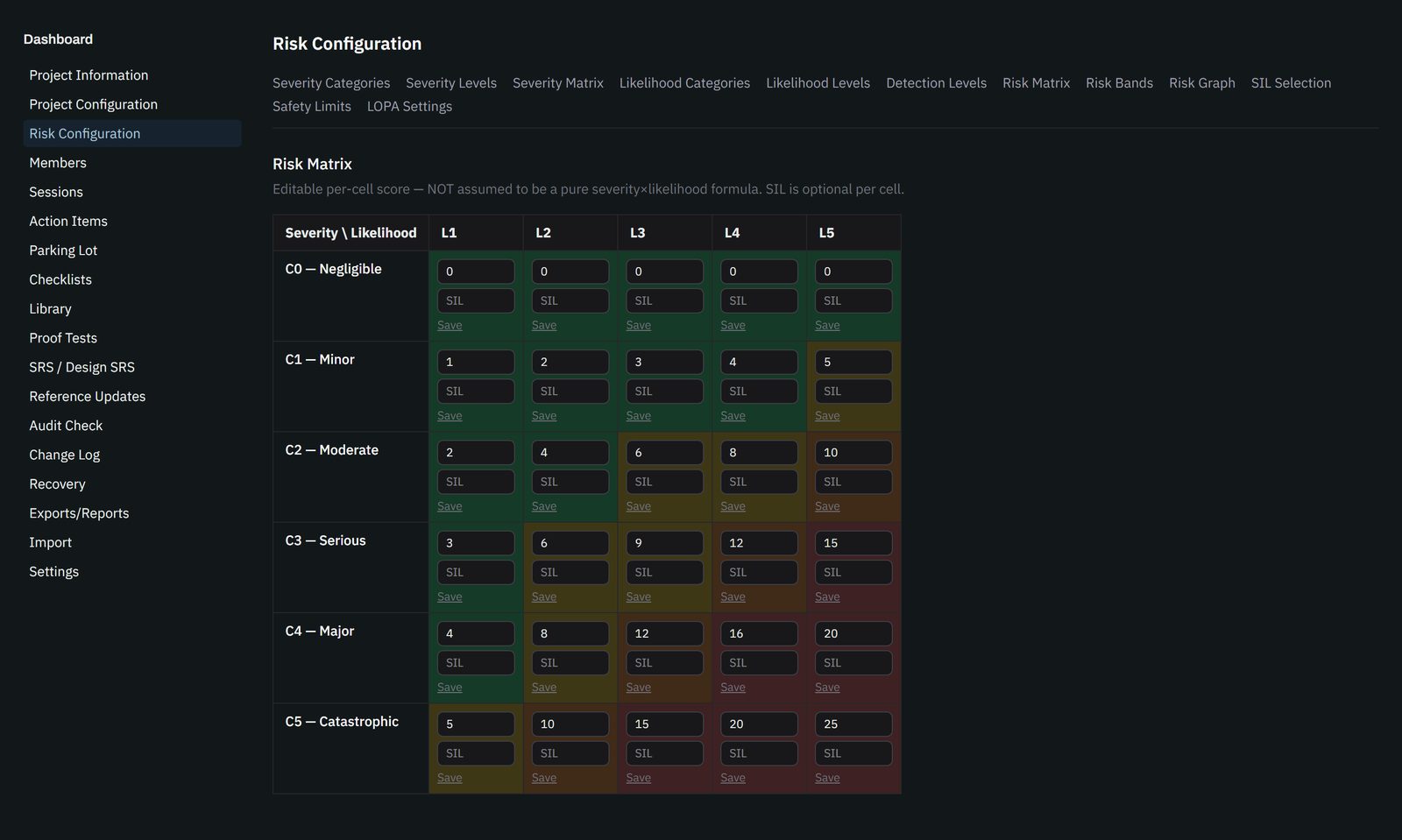
What this means technically. Risk matrices, severity and likelihood definitions, acceptance criteria, terminology, company standards, checklists, mandatory questions, decision criteria and LOPA/IPL rules can be configured at company level.
The purpose is not simply to customise screens. The company methodology becomes part of the study workflow itself, so a change of facilitator does not require a change of process-safety discipline.
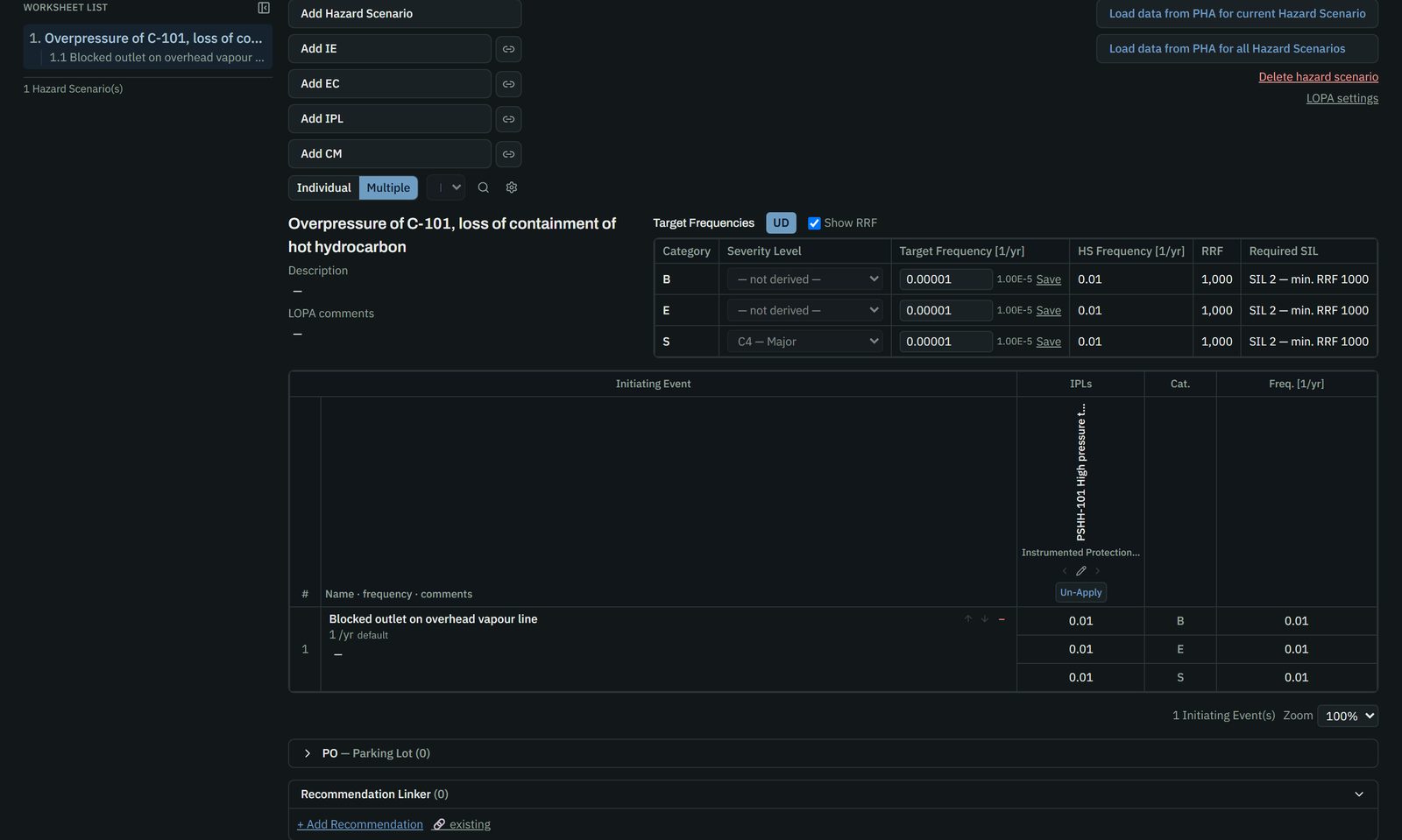
The same scenario and decision context is reused across the PHA stages, and past scenarios, safeguard decisions, recommendations and closures stay connected in one knowledge chain.
A scenario developed during HAZOP can become the basis of a LOPA. A SIF requirement identified through that analysis can continue into SIL verification. A recommendation remains associated with the scenario that generated it and with its subsequent action and closure.
Five years later, the next PHA team can see what was previously evaluated, the assumptions used, why safeguards or IPLs were credited, which recommendations were generated, how they were closed, and what has changed since the previous study.
The technical objective is not only less repeated data entry. It is preservation of the engineering decision context, assumptions and traceability between each stage, so the Container is not a larger archive but the relationships required to understand the previous engineering basis.
Multi-site benchmarking · corporate best practices · standardised methodology.
For multi-site organisations, structured PHA information can make recurring scenarios, safeguards, IPL decisions, equipment-specific findings and recommendations visible across studies.
This does not mean that a conclusion from Plant A automatically applies to Plant B. Plant-specific process conditions and safeguards still require engineering review. The value is that relevant previous experience can be found and considered rather than remaining buried in historical reports.
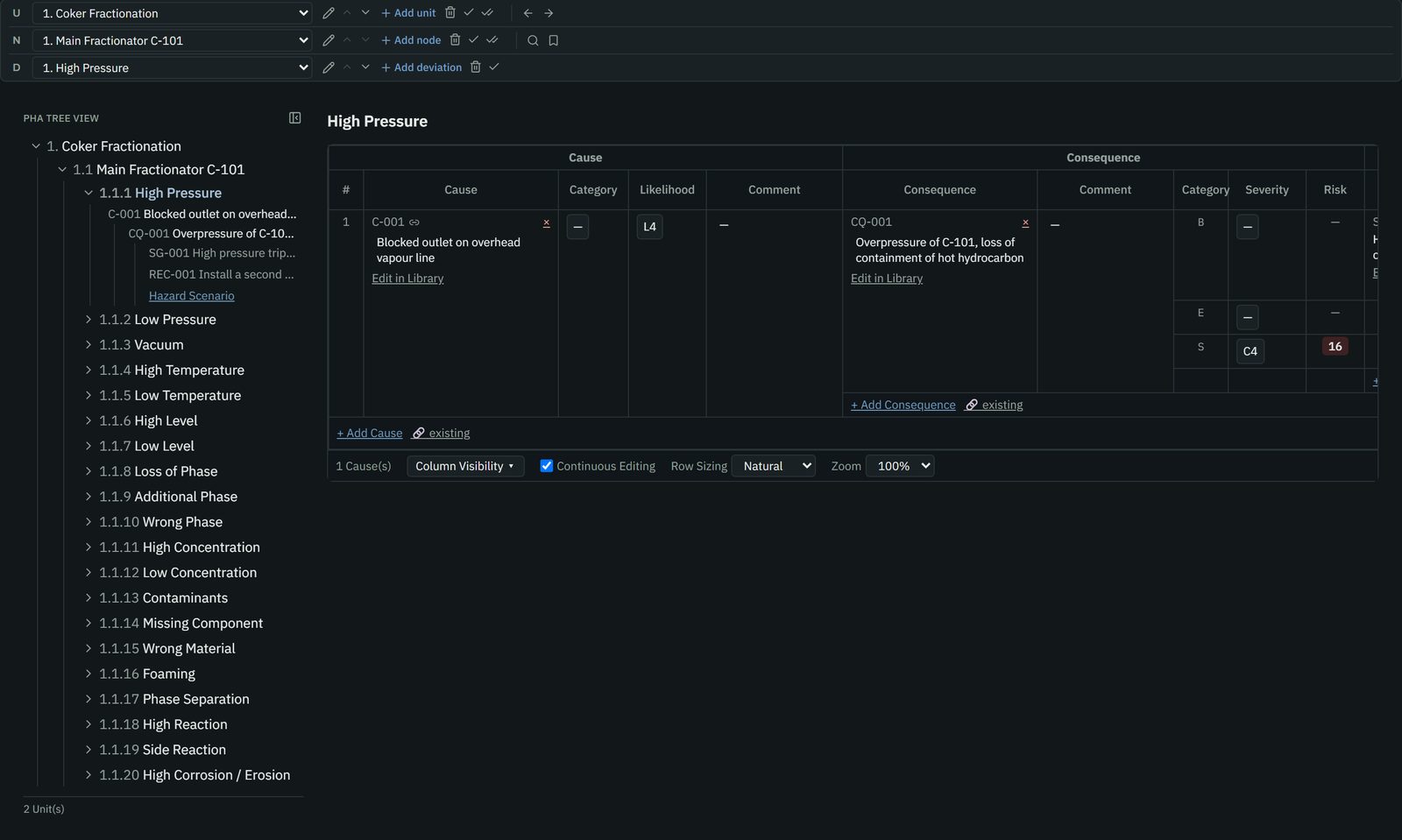
The Copilot is not the decision-maker; it is a support layer for the facilitator, grounded in the company's own Process Safety history.
Ontology, taxonomy and structured data come first. With sufficient validated history, an assistance layer may retrieve similar causes, consequences, safeguards, historical IPL decisions and comparable scenarios for facilitator review.
Scenario credibility, safeguard adequacy, IPL validity and risk acceptability remain decisions of the multidisciplinary PHA team. The usefulness of the Copilot therefore depends on the quality, consistency and traceability of the underlying process-safety data.
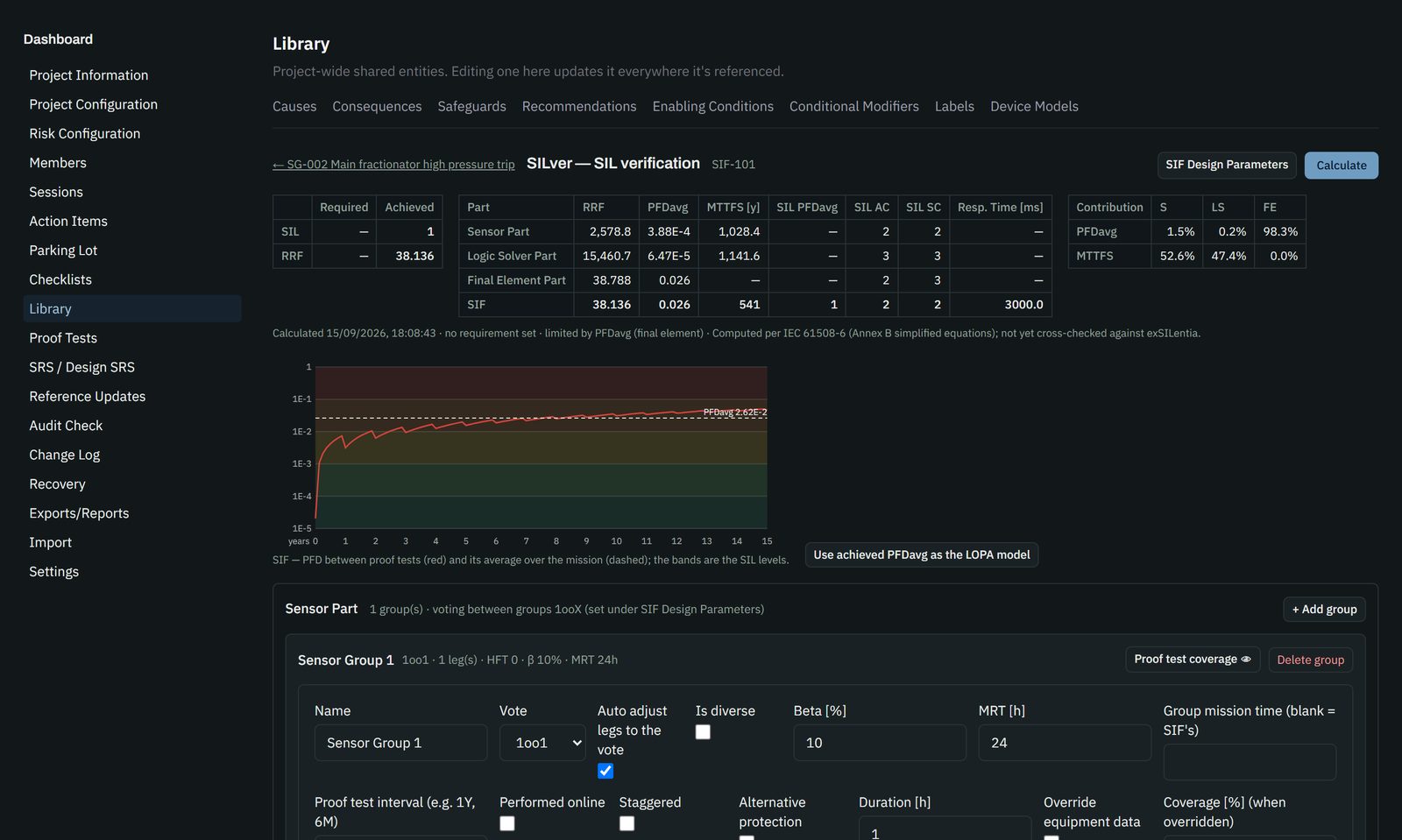
PHA studies, history and related decisions remain in one corporate environment.
The same company methodology can be applied across different facilitators and plants.
Less repeated data entry and less effort reconstructing historical context.
Controlled visibility of relevant experience and best practices across plants.
Structured data suitable for benchmarking and, later, controlled Copilot support.
The company can choose its experts while retaining its methodology, records and knowledge.
One container per company · browser first · data you own · your standard in code · traceable numbers · standards behind it.
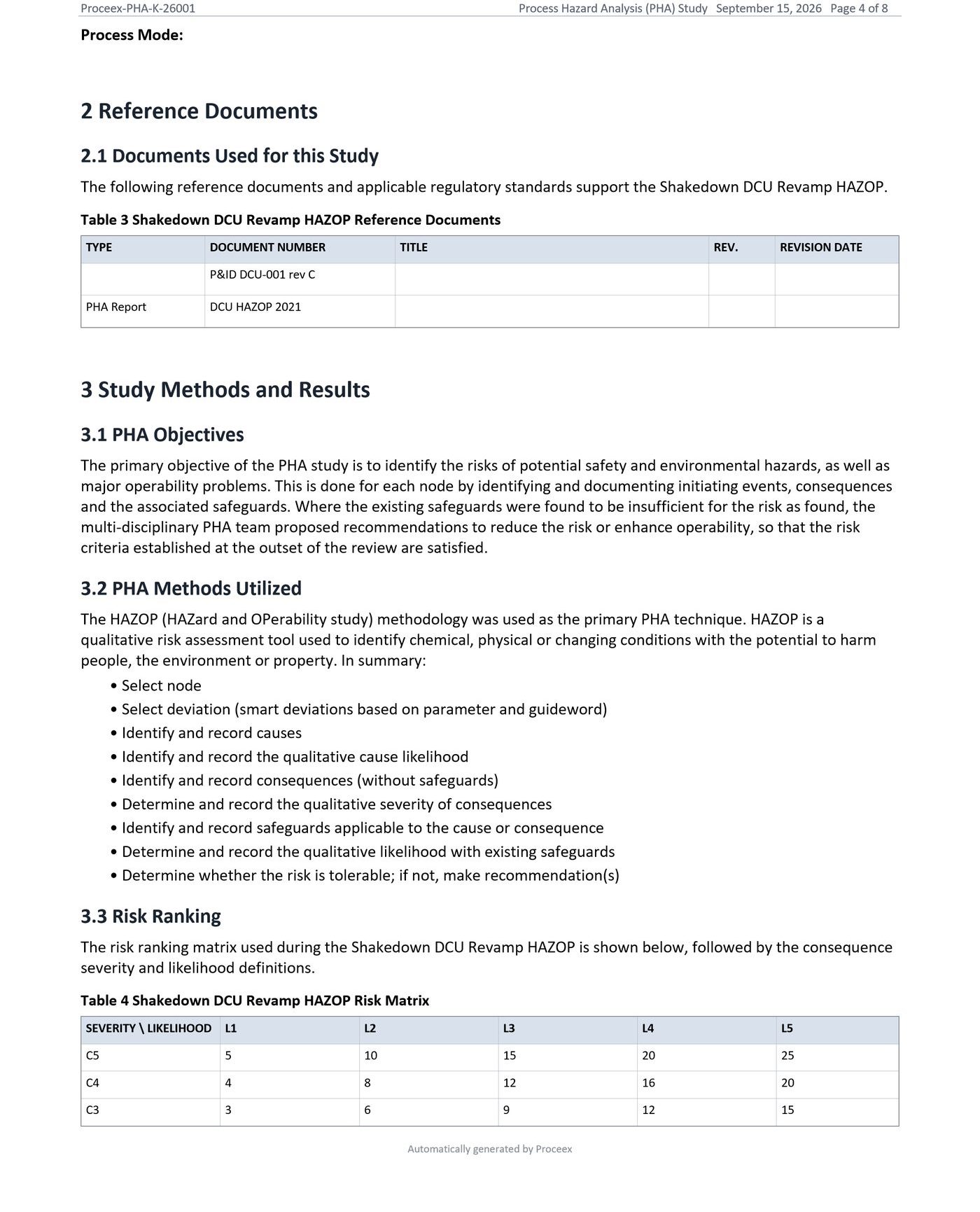
PROCEEX draws on more than 20 years of chemical and process engineering experience, including oil & gas and multidisciplinary industrial projects, together with more than 1,000 hours of hands-on PHA facilitation.
A PHA is not only a worksheet produced during a meeting. It is a record of scenarios considered, assumptions made, safeguards evaluated, decisions taken and actions generated by a multidisciplinary team.
The system is being developed to maintain those relationships throughout the process-safety lifecycle and to keep the resulting engineering knowledge under the organisation's control.
From PHA software to Process Safety Infrastructure.